seriously, humans are weird & so is Dry July
As Dry July draws to a close, I do a Not Serious cost-benefit analysis on the whole gig, and I pay tribute to someone who was a leading advocate for the advantages of a world with wine in it, The Prop, our beloved Sam Neill.
Every year, drinking undergoes a dramatic rebrand. One minute we’re happily opening bottles because it’s a Thursday in December. The next, everyone is clutching a sparkling water and announcing they’ve never felt better — all because the name of the month sounds witty when paired with the word dry.
Humans are weird and so is Dry July.
I’ve recently heard some clever variations on the whole ‘Dry July’ theme. At a recent gathering with the good people at Trinity Hill, winemaker Warren Gibson mentioned his wife likes to call it Try July and the folks pouring spirits at Neat are focusing their efforts on Rye July, introducing whisky to a wider audience. One person mentioned to me recently that they observe Dry July by drinking only dry wines, which keeps their options well and truly open.
If we need this sort of rebellion, what is Dry July actually for?
There are some compelling reasons. Health is a decent place to start. Saving money offers another strong argument for putting the bottle back on the shelf when you’re standing in the wine aisle. Perhaps there is a charity that means something personally and you want to do your bit — even when your bit requires abstaining from an ice-cold, seriously refreshing glass of Riesling or washing down a winter stew with a restorative red.
Perhaps you want to check whether the evening glass has become an automatic response rather than an active choice — a sensible thing to do if you’re unsure. There are plenty of valid reasons to take a break.
The problem I have is that the conversation around alcohol so often gets translated into an all-or-nothing position.
Drinking is either fun, sophisticated and social, or alcohol is a toxic poison being rammed down our throats by nefarious producers intent on making money by slowly killing their customers.
Neither version makes much sense. It is possible to enjoy wine and occasionally leave it alone. The two positions are not constitutionally opposed.
It is also fair to ask whether thirty days of abstinence followed by eleven months of unchanged behaviour achieves much of anything. If your drinking throughout the rest of the year is concerning enough that one month off feels like an intervention, the answer probably isn’t a novelty calendar challenge. It may be time for a more honest conversation and some proper support.
For everyone else, perhaps the value of Dry July is simply that it interrupts the routine. It makes us notice when we drink, why we drink and whether we’re actually enjoying it and that’s valid.
Are you opening a bottle because the wine is interesting, the food deserves it and you want to share it with someone? Or are you pouring a glass because it is 5.47pm and this is simply what happens next? Is the second glass really adding anything? Does every social gathering need alcohol? Are you choosing the drink, or merely reaching for it?
Those seem like more useful questions than whether you succeeded in remaining completely dry for an arbitrarily selected 31-day period.
If I am going to argue that Dry July may not make a profound difference to the average drinker, I would be remiss not to mention the maker.
The wine industry doesn’t like Dry July and gets bothered by a movement that, in practical terms, causes little more than a temporary blip on the bottom line.
Part of the frustration is that wine is often used as the generic visual shorthand for all alcohol-related harm. A story about binge drinking, licensing breaches, public disorder or some dire new piece of research will frequently be illustrated by a handsome glass of red wine being poured in slow motion and winemakers would be hard pressed not to take that personally.
Wine becomes the face of the story, even when the story is not really about wine.
That is irritating for an industry made up overwhelmingly of farmers, growers, winemakers, cellar-door staff, restaurant workers, salespeople and small family businesses. Most of them are not lurking in dark rooms planning how to encourage the nation to drink itself into oblivion. They are trying to grow good fruit, survive another vintage, pay their staff and persuade someone that $38 on a bottle is good value — which is bloody reasonable given that bottle may have taken years to produce. They also want their customers to fall in love with the enjoyment that comes from sharing a beautifully crafted wine.
But the industry also needs to avoid becoming defensive every time someone suggests drinking less.
If people taking one month off causes frustration, perhaps the problem is not Dry July. Perhaps the problem is a business model too dependent on people drinking routinely and without much thought.
A person drinking less frequently does not necessarily mean a person cares less about wine. It may mean opening fewer bottles, but choosing better ones. Drinking with food. Sharing a bottle rather than absent-mindedly finishing it. Paying closer attention to where it came from, who made it and how it compared to another, different wine they’ve tried recently.
That should not terrify a quality-focused wine industry. In fact, that schizz should be right up the wine industry’s artisan strasse.
Wine has never been particularly well served by being treated as a unit of alcohol delivery. Its best argument has always been that it is agricultural, cultural, social and capable of making a plate of food and an evening with friends considerably better.
That argument becomes weaker, not stronger, when we insist wine must be consumed frequently throughout the week in order to remain relevant.
This might be a good moment to mention our much-loved, recently departed wine advocate, Sam Neill. He publicly espoused the very real human value of sharing a glass or two. The music, the memories, the stories that get shared when a bottle of wine and friends are involved. He spoke of the creativity and connection that he enjoyed by crushing a cup with other thespians or the layperson lucky enough to dine at his table.
There is another oddity in the Dry July conversation. Abstaining from alcohol has become almost as performative as drinking once was. If you’re on Insta, and into the wine chats, then it’s likely the Steven Bartlett ‘Diary of a CEO’ saga has fallen into your feed. Essentially, that poor bugger had two glasses of wine one night and he was rendered incapable of putting together a podcast or cleaning his teeth (or something equally ridicu-farken-lous) for the next two or three days. I mean, Mon Dieu! What the actual F was he drinking? Are we sure he wasn’t pouring glass-sized serves of Chartreuse thinking it was Château Pétrus? Much like Dry July, they sort of rhyme…
It seems people don’t simply stop drinking. They announce the cessation, document their improved sleep, discuss their suddenly luminous skin and begin evangelising about the clarity with which they now approach Monday mornings.
Good for them. Truly. Seriously.
But not having a drink should not require a TED Talk any more than having one should require an apology.
Take the month off. Don’t take the month off. Try a few alcohol free nights each week. Stop after one glass. Open something brilliant only on Saturdays.
What matters is not the challenge, the hashtag or the mildly amusing name attached to the calendar month. The useful part is noticing whether you are making a choice. Because drinking wine can be pleasurable, interesting and sociable. Not drinking wine can also be pleasurable, interesting and sociable.
And it’s weird if we don’t allow both realities to coexist — all year round.
To end, mentioning Sam Neill in passing like I have in this piece feels quite wrong. The man deserves an essay of appreciative love and acknowledgement for his participation in the world of wine, and for his contribution to the endless entertainment he served us all by way of drama, humour, and wonderful films, and for his advocacy for the environment.
I just feel monstrously unqualified to do him justice and I suspect Sam’s unassuming modesty, for which he was clearly so loved, might mean he’d be pleased I didn’t make a fuss.
Cheers to that seriously good human, who celebrated weird humans just as much as he celebrated wine.
I’m pretty sure bottles were opened, and the odd ciggy smoked in the making of one of Sam’s early films, Sleeping Dogs, Directed by Roger Donaldson with Aardvark Films.
Pour yourself a glass of something that suits you in this moment — wine or non-wine — and enjoy this epic trailer. Cheers, Sam. Vale, Sam.
F.D.B. xx
Now is also a great time to do another shout out to our pals at Antipodes Water Co for hydrating the chats the alcohol free way. Keeping it fizzy and fun the night before and the morning after since 2003.
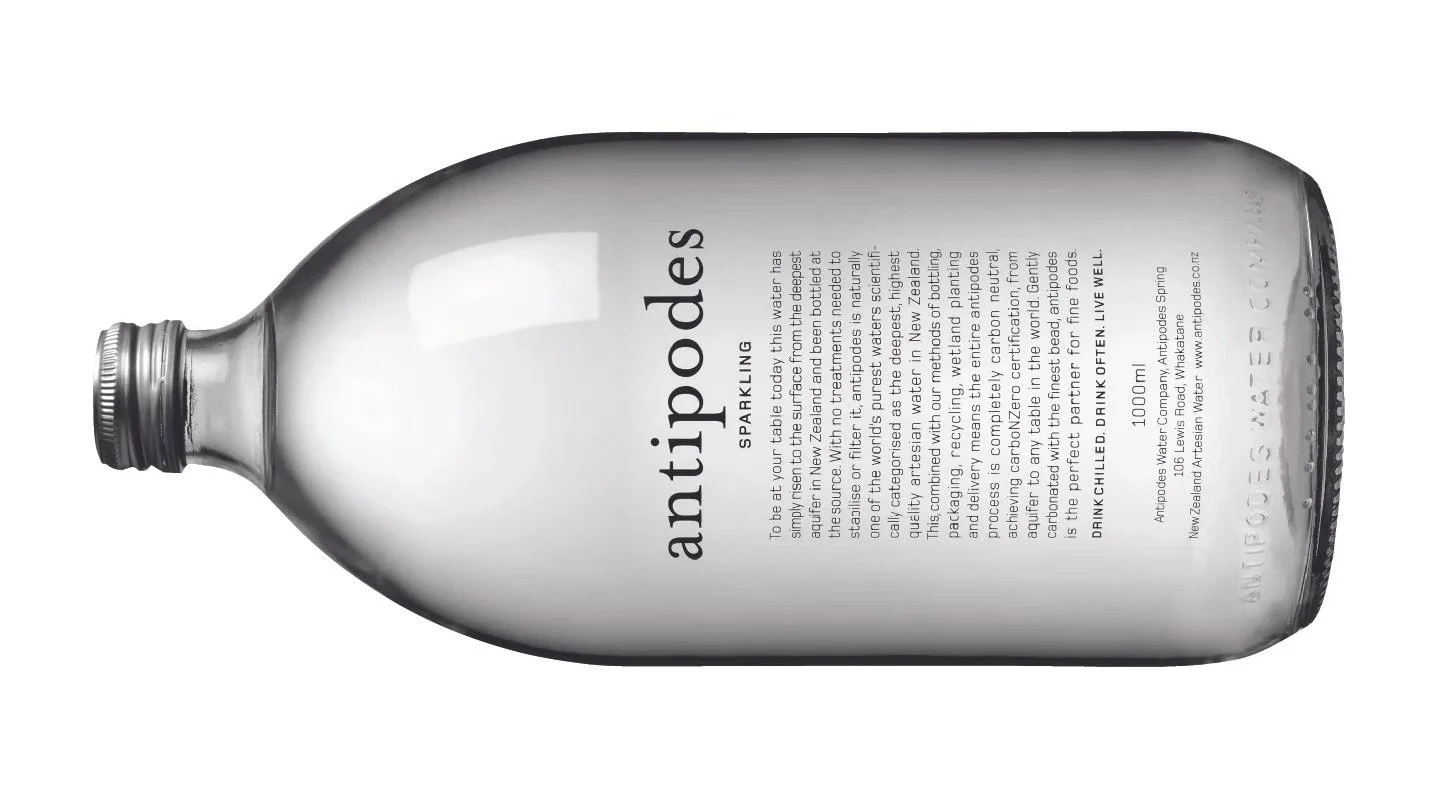
we’re super grateful to our pals at antipodes water company. they supply us with the good water for our chats. antipodes is an artesian water that contains no chemicals, and when you’re pouring an organic wine that is gold. the mineral content also keeps the palate fresh so you can taste the wine the way the winemaker and nature intended you to. thanks antipodes, you’re the bomb. antipodes.co.nz